YONE: American Pillow Book
Yone’s new life is dawning as he leaves Tokyo for America.
This is the 26th year of our Emperor Meiji.
Yone, born into this Restoration, time of Westernization, will be propelled beyond Nipponese shores to embrace a new language and a new land.
Yone is a tender seventeen.
He exchanges his kimono for Western attire. A silk tie and bowler hat. He struts forward, looking down at his shiny leather shoes. What an elegant young man!
He rereads Longfellow. And Emerson. He will be a New Man in a New World.
Boarding the Belgic, he waves a tearful farewell to the Bay of Yedo.
Sayonara, dear city.
Passage across the ocean is a long difficult birthing. Seasick, he struggles to the deck to witness the infinite expanse of oily-looking waters and a lone star on the darkening horizon. He vomits into the Pacific.
Aboard the ship, he meets a stuffy old Japanese gent with a stovepipe hat on his way to be our Japanese minister to Mexico. Oji-san repeats his cups, tongue loosened, expounding on the Chinese question, then declares that the future of the Japanese people lies in Mexico. What does this man know of the Spanish language? Through the air drift cursing voices, red-faced sailors at work or gambling.
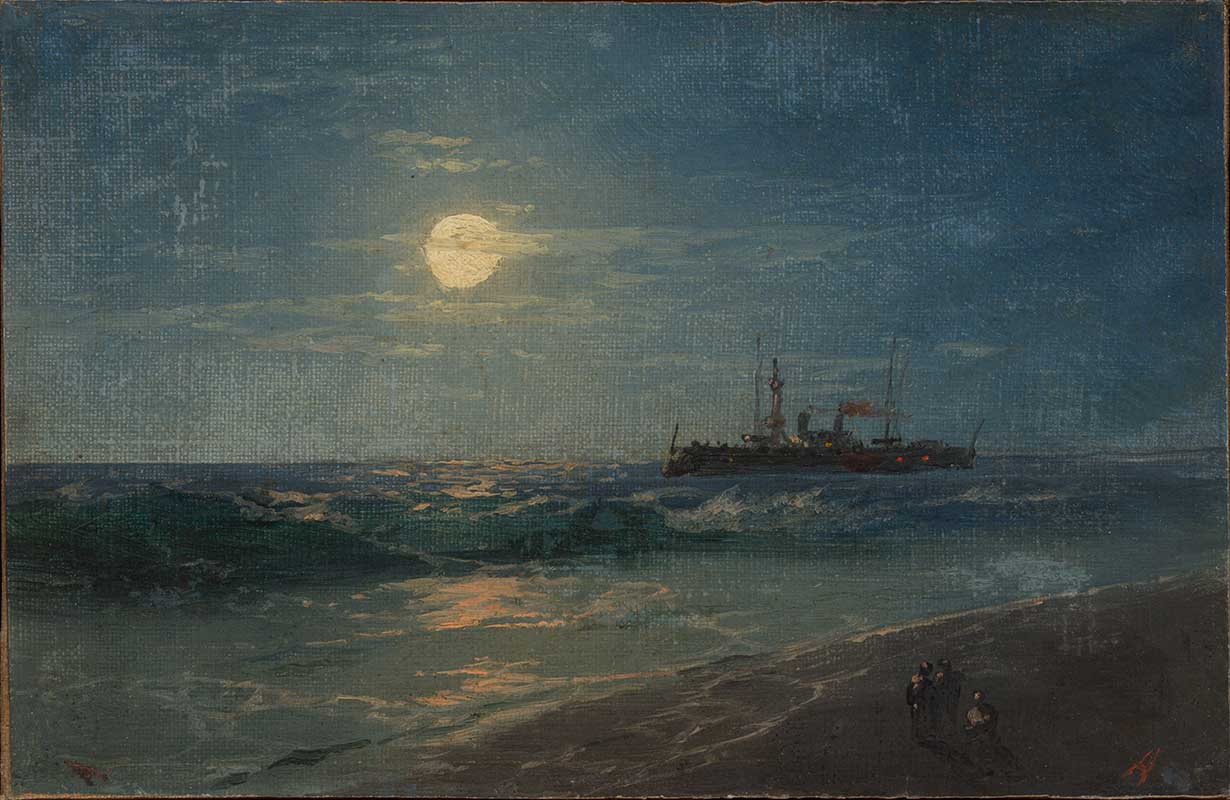
But one evening, Yone awakes to see the ocean moon at its fullest, and it is then that he knows the moment of his loss. Distant in his homeland, he imagines the same moon. He weeps.
Back there, in Tsushima, just outside Nagoya City, his father sells paper umbrellas, wooden slippers. He has left everything behind for his first love, an English spelling book.
On the next morning, the Belgic arrives at the port of San Francisco. Yone, filled with anticipation, shaves, combs his hair, dresses to perfection. Primping in the mirror, looking this way and that. He will arrive in America a young prince.
Oh, by the way, as it happens, every now and then, a character rises from the page and writes the life of her author. This is nothing new, and, to be clear, I am simply sharing my intentions. I am Asagao, Miss Morning Glory, and this is my story about the poet Yone.
As you may know, Yone wrote my diary, The American Diary of a Japanese Girl, and now I, Asagao, will write his. I write this as a corrective to other false impressions of my hero and to substantiate his portrayal of me, who, for as he knew, was not a foolish character in the Mikado or a pathetic geisha doomed to take her life or a Chinese Canadian pretending to be a Japanese authoress.
Ah America! The dream is a complete failure. Upon the docks, smoky air and the putrid stink of sweaty humanity. Cars chasing cars in cavernous streets, shadowed between the highest of edifices.
And what of that street beggar? Yone has imagined even the poorest American dressed in swallowtail coat with a book of Emerson in hand. No such personage. Where is his Emerson?
The Cosmopolitan on Fifth Street, a shabby yet palace-like hotel. Yone rises miraculously by elevator to a room with high ceilings and electric globes. He enters at dusk and pushes a button. Light dazzles from above. But the bed is soft like water, once again rocking him, nauseated, at sea, sleepless.
In every corner on every floor, a spittoon, but wandering out to the street, a red-faced man claps him on the shoulders. Hello, Jap! And spits in his face.
Life in America begins with a letter of introduction from Shiga Shigetaka, Tokyo benefactor and editor of Nihonjin. Sugawara Den is the clerk for the Aikoku Dōmei located in a gloomy house on O’Ferrell. It’s a patriotic league like Russian anarchists, something Yone’s read about. Here is adventure for the boyish mind. Join our movement! Sell our paper, Sōkō Shimbun.
But what sort of job is this? Petty change for pancakes made from flour and water. Go without dinner except occasional free food at the Chinese restaurant on Dupont Street in exchange for ads in the paper. No bed but a tabletop spread with newspapers, encyclopedia for a pillow, in a house full of rats.
But who cares, if Yone can read. Food for the mind. In America, you can read books for free from a library. Shakespeare’s Hamlet. Poe, Byron, Blake, Keats, and Shelley. He cannot make his spoken English understood, but his mind swirls with its most lyrical language.
Then one day, the Enseisha guys with their opposing paper, The Golden Gate, fight the Aikoku, and Yone’s dear friend Hinata Terutake beats up an Enseisha man with an iron bar. Young Japanese only talk politics. Yone craves poetry. Time to move on.
Put an ad in the Chronicle soliciting work. Menial labor in private homes in exchange for food and board. Stoke their fire, cook their meals, wash their dishes, scrub their floors, and maybe there will be time to go to school. At Stanford’s Manzanita Hall, Yone cleans the classrooms and serves the student-boarders in exchange for a lecture or two.
But Yone’s shoes have become heelless, his socks shot with holes, his shirt threadbare, his jacket dirty. Exchange of This for That cannot buy him respectability.
Yone washes dishes at the Menlo Park Hotel. The poet’s delicate fingers turn blue and swollen. Even in America, money does not come easy.
Then, all at once, life takes a turn. Hike to the Oakland Heights where Joaquin Miller lives. Miller, the hermit who lives on dews, God’s gardener, raising roses and carnations. He’s a rugged white-bearded mountain man in top boots, cloaked in bearskin, a cap of ribbons. A red crepe sash about his waist, he’s named himself Joaquin after the Mexican revolutionary Murrieta.
Miller is, they say, extremely fond of Japanese. Yone is Japanese. Just go up and meet him. In the Heights, nature never hurries. It is here that East meets West. And it is here in the Willow Cottage where Yone will live, caring for the old poet and his mother and their guests, their meals, household, and gardens across acres and acres of field, forest, and canyon. Living in the mists overlooking the San Francisco Bay, Yone enters his dream of romance and poetry, apprentice to the Poet of the Sierras.
Yone resolves: I will become a poet. But was he not already a poet reclining heart-to-heart on the breast of Mother Nature? True poetry is not in writing, but in the union with nature.
Set a table in the dappled summer sunlight. Sprinkle rose petals over linen. Pop the cork on a bottle of claret and linger, talking of men and books. The literati come and go, and Yone, by attachment, becomes a Bohemian.
This does not mean he enters the Club. White men only, please. The only honorary other is Club librarian, a California-poet-laureate to be, Ina Coolbrith, but this will happen later.
Miller declares that Yone is one of my class, the best blood in the kingdom, an avowed admirer of Whitman.
Ah, indeed!
The dawn of Yone’s American life: poems published in the Lark. Critics write: His composition is queer, baffling Japano-English . . . like Stephen Crane . . . like an Oriental Walt Whitman. What do critics know, attaching their precious language to our exotic race?
Yone has laid bare his naked soul to the heart of nature. Who but Yone, a homeless snail, home upon his back, exiled from the island of Basho; who but he can know this infinite solitude cast over a grand and rugged, endlessly fertile and industrious continent? East connected to West by a transcontinental railroad, the Iron Moonhunter.
One of the Bohemian Club, Charles Warren Stoddard, has followed Mark Twain and Robert Louis Stevenson to the South Seas. Charles writes its idyll, his delight to have seen, to have touched and be touched by the savage islanders, their sleek dark forms glistening in the spray of the reef.
Now from his D.C. Bungalow, Charles learns of the Japanese poet, broods, and ponders.
With Miller’s assurance, Yone introduces himself to Charles, sending a poem with pressed flowers.
Charles replies: Dear friend of the Orient. Long have I waited to hear from you. And begging Yone for his photograph, The muse has brought us heart to heart.
Thus begins their loving epistolary. Long distance between Heights and Bungalow. Pals of the pen.
Yone gathers poppies and buttercups to offer to his still-imaginary Charley, throws kisses to his Bungalow, hungers for the next letter. We are like two shy stars, east and west. Let us love each other as heavenly twain.
And Charley: O Yone! My sad poet. Like the weary bird, torn from the Garden of Spices. Thy songs are tear-stained, singest the song of exile.
Yone to dearest Charley: My sweetheart, I dreamed a dream. You were a dragonfly, I a butterfly. Needless to say, we loved.
We floated down the canyon, our path suddenly barred by dense bush. We couldn’t attain to The Garden of Life without adventuring in. Then, you stole in from one place, I from another. Alas! We parted forever.
Charley invites Yone to the Bungalow, and Yone replies, Tell me when we may be together with sweet love. Tell me when!
But with what money will Yone travel and for what purpose other than to be with Charley?
Perhaps the continental trip can be made on foot.
Give it a try. Make the pilgrimage of a vagabond, a book of poems for a walking stick, into the Yosemite Valley.
Camp under the trees by a brook with its silver song. Sleep under starlight.
Sleep over fragrant hay in a barn between the legs of a horse.
Find lodging in a Japanese farm, exchanging translation for laundry and a hot bath.
Wash dishes. Chop wood.
Ride with gypsies under a bright moon.
Sit under balconies serenaded by banjos and the lilting voices of Spanish girls.
Following rail tracks into a dark tunnel, Yone falls into a ditch, but escapes. Sleeping near a coal fire, he passes out and is taken for dead. News travels. Kosen Takahashi, another admirer left behind, draws memories of Yone, charming as spring blossoms, my love forever. Kosen drowns in his tears, losing Yone to naughty spring.
Two weeks later, it’s a miracle to see Yone returned to San Francisco alive.
A letter comes from Japan, a reminder of Yone’s obligation to serve in our Imperial Army. This poet is not cut out to be a soldier. The decision is made for Yone. He will stay away in America.
But may not the poet serve the nation as poet?
Finally one day, Yone finds himself east in Charley’s Bungalow. To Yone, Charley is a white Chinoiserie, a sainted porcelain.
To Charley, Yone is far too Westernized. If only Yone had come to him barefoot in kimono.
Yone complains, Am I to be another South Sea sea god, shaking spray from my forehead like a porpoise?
No matter. They sit and doze in one huge chair with a deep hollow, its long arms appearing but a pair of oars carrying them into the isle of dream.
The Bungalow is its own idyll. Ivy creeping up brick into a broken window. Coconuts from Fiji. Fans and feathers from Hawaii. Weapons and dancing skirts from Tahiti. Persian pillows and cut-glass punch bowl. And most seducing of all, a great library of books, each autographed.
Yone is dream child, clear as glass, pure as water, sweet as milk.
Then enter journalist, historian, and Alabama belle Ethel Armes. Playing the piano in the Bungalow reception room, Ethel greets Yone for an interview in The Washington Post. As the story goes, Yone is smitten.
Charley mourns his lost Kenneth, too young, fickle, and unfaithful. He nurses a glass of Madeira, stroking tender fingers through Yone’s thick black hair.
Languidly, Yone puffs cigarette after cigarette. Then taking his cues from Ethel, he too addresses Charley as Dad.
Yone wants to marry his sweetheart Ethel, and Charley must come and live with them forever. But Dad disapproves of Ethel and warns Yone: I pray you do nothing rashly! You should both be free!
Besides, Ethel also loves Alice and Annie and Daniel. Everyone plays breakup and makeup. Ethel and Yone engage and disengage.
Meanwhile, Léonie Gilmour answers Yone’s ad in The New York Herald for an editorial assistant. She’s studied at Bryn Mawr and the Sorbonne. Léonie edits Yone’s book, a diary of a Japanese girl in America. All about me, Miss Morning Glory. Charming, isn’t it? She brings me to life. She makes the writing perfect. Retains Yone’s unique style. Campy and oh-so-modern. The invisible writer behind the writer.
Léonie moves into East Twenty-Sixth Street, marries Yone in his work.
Yone travels, and from London, he receives news of his book’s success. The reviews are favorable, but who is this Miss Morning Glory? A Japanese coquette with snippy attacks on the American bourgeoisie, with lightness and such frivolity . . . even frothy. It’s an exotic secret, but is she authentic? But of course I am authentic. What would Lafcadio say?
A highly fantastical diary of an imaginary Japanese. Fantastical, indeed!
Her piquancies would be possible in a Japanese man. Ah, American readers cannot discern a Japanese man from a Japanese woman?
But can a Japanese girl be a New Woman?
What about charming Ada, who fans herself in Japanese chic, then, hooking her arm around Morning Glory’s neck, squanders kisses? Two young ladies in wanton garments roll around happily on the floor. And so we did.
As there is no plot and barely a suggestion of a love theme, the book is evidently genuine. Ah there you are!
This is a happy benign tale, while Yone’s poetry is so mournfully sad. Sadness turns to satire. Satire is fiction. My fiction. Satire is American, but Yone can only be an American for so long.
Invisible, how can he be made visible to the world? Yone and Charley, invisible to each other.
One poet moves west to find the East. Another moves east to find the West.
Léonie is pregnant, but Yone loves Ethel, loves Charley.
After thirteen years away, Yone returns to Japan to great clamor, to celebrity. Now he is a full-grown man of thirty years. Yone is a famous poet. He writes for Yomiuri Shimbun, publishes his memoir, his poetry, his essays, teaches at his old school, Keio University.
In her mother’s garden home in Los Angeles, Léonie gives birth to a son.
Ethel cancels her trip to Japan. She won’t come. Neither will Charley. Didn’t Ethel know? About Léonie, the other woman? Never mind Charley. Never mind any of the other boys. Yone must confess. He has betrayed her.
Our Meiji Japan is victorious in war, defeating Russia, extending our Empire.
Yone is changed forever by America’s gaze. Now a man of many worlds, he can never fully return to embrace origins. Yet old privilege and power are comforting.
Yone marries his housekeeper, Matsuko Takeda.
Even so, Yone writes to Charley: Oh, Dad, if you were here with me now!
Write to me. I am lonesome!
For the pleasure of his company.
Charley has moved to Monterey on the bay. His misses his Bungalow.
He lies in bed. Rheumatism pains him. His heart breaks.
One day, Léonie arrives in Tokyo with three-year-old Baby. Baby has no name until Yone names him Isamu.
As I said, I am Asagao, and this is my story.
BRUCE: The Jetty
This is the story of two people haunted by memories not their own.
In the case of the man, he remembered his brother’s memory. His brother, a boy of three, wanders after a dog in the desert. Maybe the dog is following a man who feeds it. Maybe there are three of them walking each alone in the desert. They follow a path leaving footprints, broken cracks in the earth, a dry meringue clay. His steps go crunch crunch. The air is cold. He follows the dog along a barbed wire fence. In the distance, a man in a tower. It will be years until the boy understands that the man in the tower is a soldier with a rifle and that the fence is barbed wire. A shout comes from the tower. The dog runs into the path of the walking man. Maybe the dog chases a lizard under the fence. Maybe the boy chases the dog. A small dog can scoot under barbed wire. The man’s attention follows the dog. Hey, come back here. Maybe the soldier’s aim follows the dog like a deer or coyote; he’s a good shot. Wherever the aim, the shot follows the man, charges into his back through thick clothing, shattering bone and skin. The boy sees the man kneel, his arms flung upward in surrender and supplication, sees the man fall, blood pooling into meringue soil. The dog circles back. The man’s mouth is an O. The boy runs away. He is lost to his parents for hours before they find him, but they will never know what he has seen.
In the case of the woman, she remembered her sister’s memory. Her sister, also three, is holding a wooden skewer of dango in her small hand. She’s walking with her parents away from the carnival. She wraps her teeth around the top dango, sticky with teriyaki sauce, stuffs it into her little mouth. Her mother reprimands her to wait to eat when they get home. She runs ahead to get there sooner, mochi clinging to the roof of her mouth and teeth, black sauce running down her chin. She knows the way, little feet kicking up sand and dust. Years later she will understand that home is makeshift and temporary, a tarpaper barrack with wooden steps. Shouts growl and men scatter. She sees the familiar face of her uncle, sprawled backward on those steps against the door, blood spilling from his nose and mouth, his throat slashed, head twisted, eyes aghast. Her fingers grip the skewer raised like a weapon. The texture of mochi, taste of sweet shoyu, from that moment, is anathema to her senses, but she will not remember why.
Both events occur at twilight, moon rising as sun sets. The soldier climbs down from his tower. The killers flee with their knives. Two men stare into the eyes of terrified children, their faces a last fading vision. The children—a little boy and a little girl—impressed with a first memory, lose speech. Even when they do not know that speech incriminates, they lose speech, go silent for many years. Each soul stands at a crossroad of three paths; only one leads to freedom, the unknown, the provocative.
In the aftermath, years after, the man and the woman are born. They are born outside and distant from the bleak circumstances of their older siblings, and for a short moment they experience sunlight and seaside. But a cold war follows, and they follow their siblings into an underground cadre of the people. The memory of sea and sand glistens in their eyes, ties them nostalgically. They fall in love. Now, they sleep together in the underground, each haunted separately by a repeating nightmare they cannot decipher. They come to know that the nightmares are the reason they are underground. When it is time to sleep, they hold hands and whisper. You are trembling. Wake. It’s your nightmare again. Tell me. What do you see? They learn to see in the dark.
Learning to see in the dark, they make films.
The woman is obsessed with making films to remember the way it used to be aboveground in the light. She makes films to recall and unravel the moment mistakes were made, to spy on the past to see when and how the evil began. She makes films to return, to understand and discover how to start over again, how to make something new, how to climb out from under, if it’s possible to turn a thing inside out.
The man is obsessed with films he remembers seeing, films that had nothing to do with his own life, filled with people he didn’t live with or know, filled with romantic stories of other lives that probably never happened. These remembered films fill his memory, substituting the past with an imagined past. He recreates these old films, collecting pieces, picking through his fractured memories of them, zooming in, interrogating the fuzzy details, collaging pieces and merging stories, repurposing them to reveal feelings he used to have when they lived aboveground.
When the woman makes films of her memories, the man takes her films, cuts, collages, and rearranges them. He turns some of her images into stills, then reframes them. Her films, once linear, stutter, fragments of her memory turned into his new film.
When the man makes his films, the woman cuts out segments to use in her films, adds a voiceover to connect his segments into her narrative. She uses his newsreel flashes, his cartoons, his iconic Hollywood moments, his images of natural life—water, waves, fish, birds, sky, and snowy peaks—to make poetic sense.
Because they see memory differently, sometimes they argue. They yell and cry, but they always get back in bed and have sex. But, one day, although it is never day and only time, the woman makes a film to retell the man’s nightmare, a memory of his brother’s memory of a man and a dog walking in the desert. The man becomes upset because the woman has used his memory in her film. She says it was not his memory anyway, and besides, was he saving it for something? One of your art films that nobody understands? The man decides to make a film of the woman’s nightmare about a girl with a dango skewer slitting a man’s throat. His film is stop-action and horrifying, and the woman screams. After this, they don’t speak to each other or have sex for a long time.
Eventually, however, the filmmakers reconcile. They are given the task of creating a film that is a video game that will time-travel so that it may be possible to find the moment that caused the evil that forced them into the underground. The woman believes that this might be possible. The man has no such illusions, but he believes that, maybe, this is a way they can escape.
They make a prototype confined to a concentration camp. The goal is to get out. The player must answer a series of questions on a questionnaire. The critical questions are questions 27 and 28. There are eight possible answers: yes-yes, yes-no, no-yes, no-no, blank-yes, yes-blank, blank-no, no-blank, and blank-blank. But or if answers are useless. In fact, any answer other than yes-yes is problematic. Answering yes-yes makes the game shorter, but you don’t necessarily get out or win. Staying alive long enough to leave is not easy. You can be killed several ways: suicide, disease, old age, inadequate hospital care, work accident, stabbing, gunshot. It’s possible to leave as a soldier, but then you can assume, for purposes of the game, you die anyway. Depending on your answers, you are assigned a number and a barrack. You do have some agency; for example, at the outset of the game, there’s a pull-down list of age, gender, and generation: issei, nisei, kibei, sansei. There’s also a list of jobs: nurse, cook, fireman, block manager, teacher, police, co-op worker, journalist, artist, social worker, preacher, etc. You can choose your avatar. Now you need to familiarize yourself with a map of the camp—the mess hall, latrines, and boiler rooms, hospital and administrative offices, schools and churches, baseball fields and gardens, stockade and jail. And don’t forget the perimeters of the camp, the lookout towers, the borderlands beyond. Now, depending on your generational choice and answers to 27 and 28, the game may situate you as loyal or nominally loyal or disloyal, and you must navigate a complicated journey through the camp. The journey will bring you into contact with the JACL, with pro-Japanese nationalists, gamblers, social researchers, draft resisters, draft officers, FBI, military, camp officials, the Spanish consul, and ACLU lawyers. Remember, it doesn’t matter what you think or believe; only your answers to 27 and 28 matter.
So, this is the filmmakers’ videogame prototype. However, games have rules. Time travel also has its rules. The filmmakers discuss these rules and think there must be a way to break the rules. They strategize that, before anyone is allowed to leave the concentration camp, the man shot in the desert and the man stabbed on the wooden steps have to be saved. Maybe this is the key to the game. The men must live to leave so that the little boy and the little girl can also leave.
The filmmakers decide to test their theory. They assume their avatars, as little boy and little girl. They enter the game.

