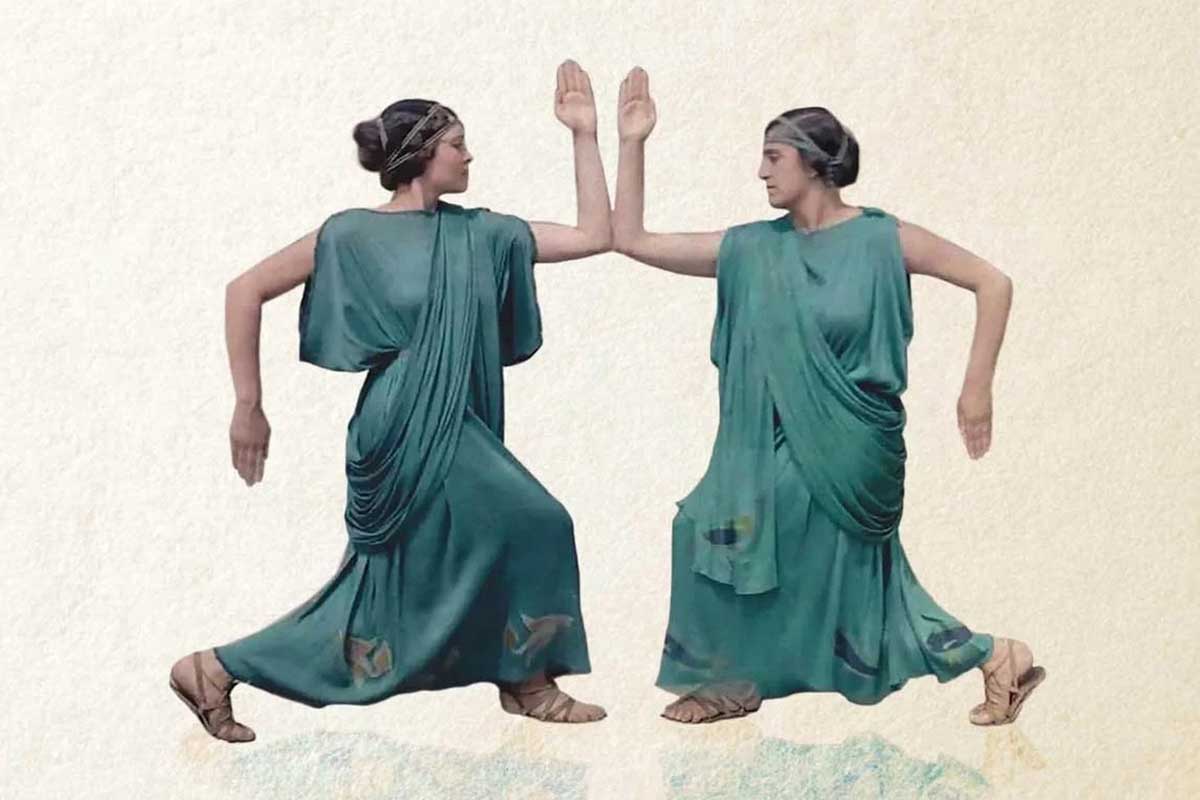
ALL Welcome.
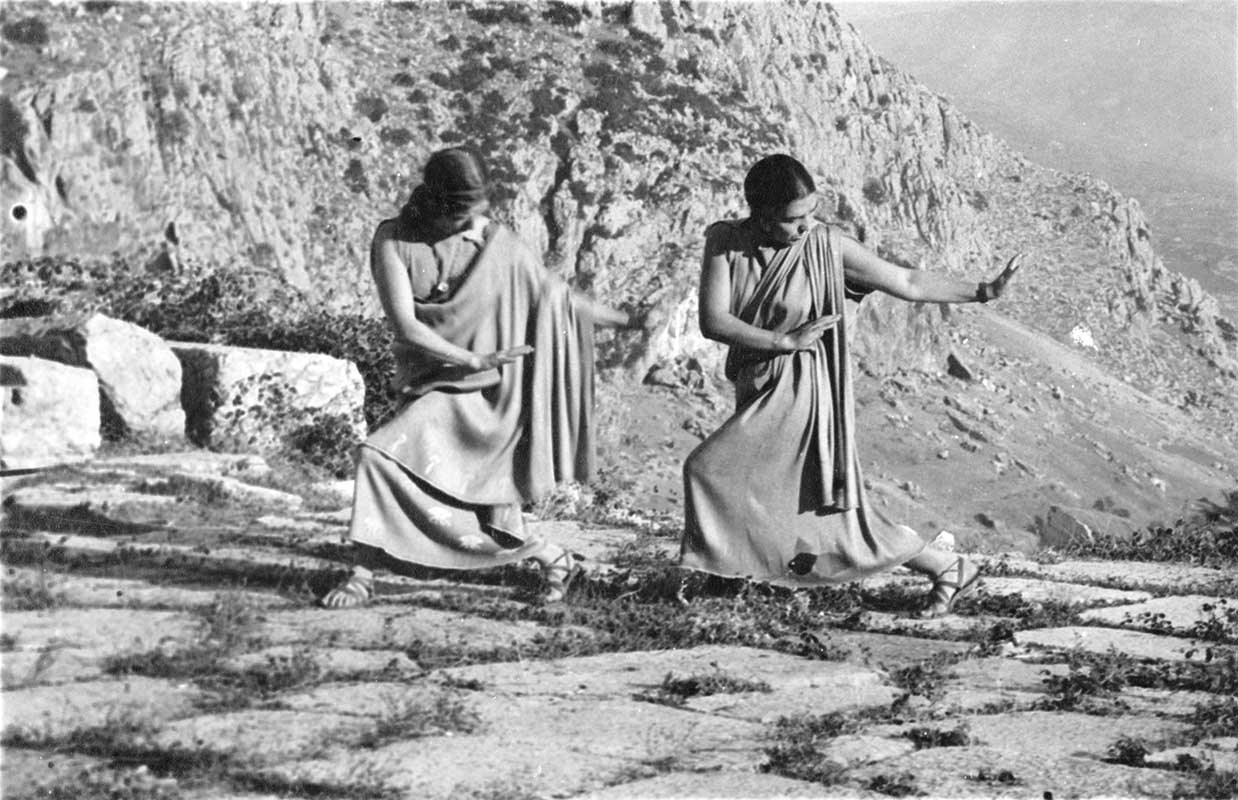
rehearsal is at dawn when we know where the shadows will fall
Rehearsal is at dawn. The hour that slowly spreads across the globe, unfailingly turning toward the sun, so that at any time of any day, someplace on the planet there is birdsong greeting first light. The crepuscular hour when those animals who live between light zones hunt, prowl, creep. Not the full-night nocturnals, not the full-day diurnals. The hinged, the half-lights. The ritual hour of doors opening and doors closing. Grainy shadows flickering. The shapes of light and no-light massing. The women gather to greet it, clasping hands, moving feet in the path that was drawn for them through the dust, opening their mouths, warming throats where animals nestle and thrum, voicing the chorus’s song. Ah, ah.
Each morning, they participate in the opening of the world in this way. They raise their right feet in unison and cut a low angle across the air. They step down in unison, striking the earth as an intimate drum. Raise the left foot, dip the right knee and raise their still-clasped hands, singing. Lizards and rabbits can read the message because seismic communication is an ancient modality. Together, the dancers inscribe circles in the dirt and air.
Or rehearsal was at dusk, when you close all the doors.
You stand in the doorway between sun and earth. You stand in the doorway when we are just beginning to see. Thank you, light. Or when things are just beginning to lose shape. Goodbye, light. As the doors open and close, something will spill in or something will slip out. Are you in the thick of it, or are you a witness?
In either case, dusk or dawn, Koula to the right, Eva to the left. Their lives were never the same.
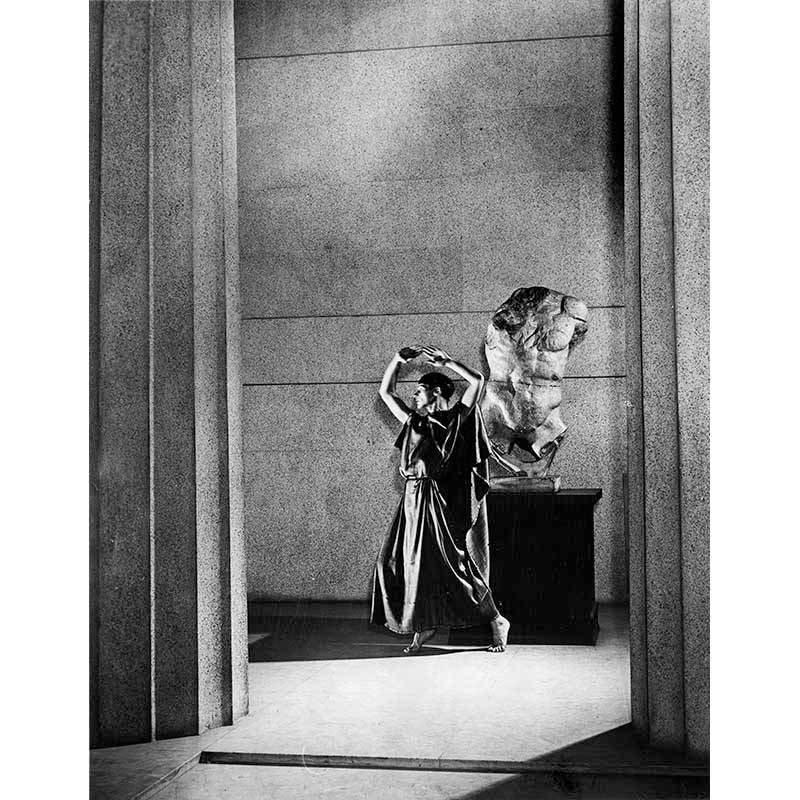
“suddenly the immobile, smashed stone remnants had dancing feet”
One day you wake up to discover you’re not who you think you are. You’ve been trying all your life to figure it out; it turns out every angle was a wrong turn. Reflected. Deflected. You started out a child with no mother, no father, you ended up an old woman with no mother, no father.
My grandfather once told his young niece, whose parents had gone missing for some months, this, while they stood next to a small frozen pond and she sobbed: Listen, Gabriella, at some point in your life you realize you’re all alone.
This was of no help.
My grandfather was a man with no father, no mother. Or not ones who were able to hear him. He was a very quiet child, and then he was a very quiet old man.
Gabriella, who is now old, says when she walked into a room, even if she hadn’t seen him for a very long time, what my grandfather said was, “Ah. Gabriella. Ahh.”
But no, it’s not like that at all.
We are in fact crowded with people. I have been polishing my mirror for years and years, and each year, more animals appear. Ancestors crawling forward from the shadows to take a smoky sip of the present, bringing with them their silent noise. Do they recognize this world? Do they recognize me?
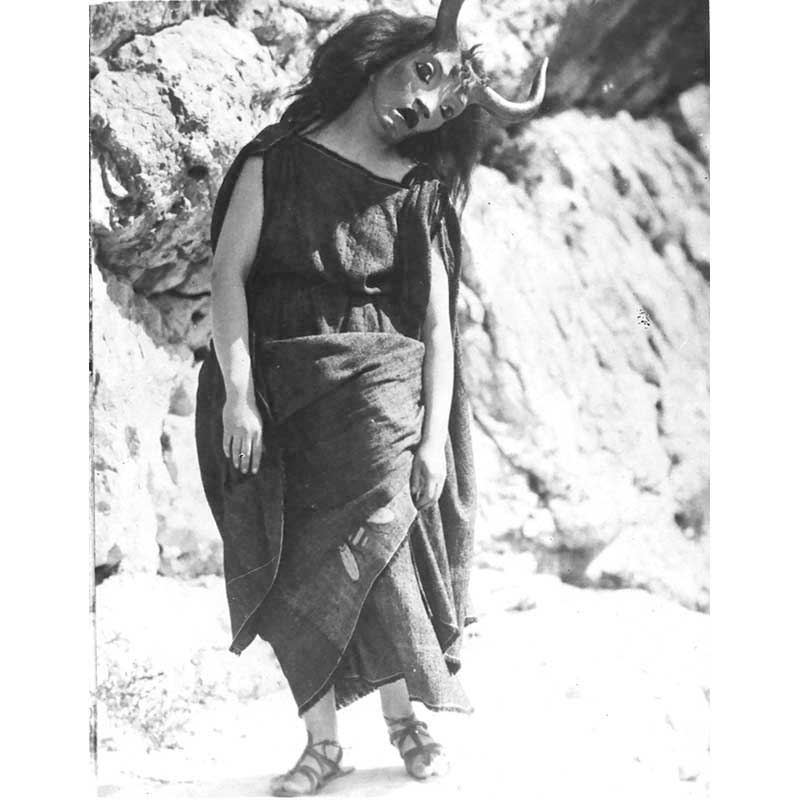
Ahh.
And this ancestor was slippery as a fish, sliding from one incarnation to the next: the good daughter; the debutante; the wealthy American in Paris; the wild lesbian orchestrating sex parties; the Muse; pseudo-Sappho wrapped in white tulle; then the fugitive tossing her corsets and gowns from the window in favor of hand-woven tunics in the style of the ancient Greeks; the obsessive theater director; the wise woman who knew how to connect the present to the ancient past; the Delphic reviver; the loving but distracted mother; the justice-seeker; the blacklisted artist; the arguer; the money-loser; the grandmother who told her grandson to eat his toast jam-side up (as a lover of freedom but not anarchy); the lost old lady in New York; the visionary; the embittered organizer who could not raise funds or get her passport back from the U.S. government; the broke old woman with no place to live.
I’ve been trying to find her because the fabric of my family was shredded to scraps and worn to rags. Because I grew up on food stamps with drug dealers and drug addicts who skittered across their days like water striders who can’t find their depth. Then I realized there were people who actually did something besides drugs in my family, people who other people in other countries were thinking about, and I wanted to put flesh on their bones, blow air into their lungs, clothe them, make them move again, make them real—make them mine.
A daughter opens the door and beyond what she can see is the void: dark—but not empty. I understand. There’s no tangible thing there that was willed to me. No land, no house, no cooking pot. But even the empty hallways make me a path that takes me somewhere. I want to know just as much about my other ancestors, the bacteria and fishes and how I descend from them, but for now I’m here with my great grandmother.
“Don’t stop looking for me,” she says.
I haven’t.
Once I heard a different voice.
That voice said, “What about me?” It was my great grandfather, clamoring for attention in the middle of a long, delirious night. Even now I can see his petulant mouth in the dark like a wet flower making the shapes of the sounds: W-H-A-T A-B-O-U-T M-E?
It’s hard to hear his voice, across the dust of time. It’s been made faint by all the particles of history that have been blasted into our atmosphere. I can hardly hear anything across the fuzzy film of decades and weeks and hours.
How can I know anything about two dead people turned into the earth long ago? I might dig up the bones, dust them off, polish them with olive oil and a white cloth and let them speak.
I’d have to find the bones first.
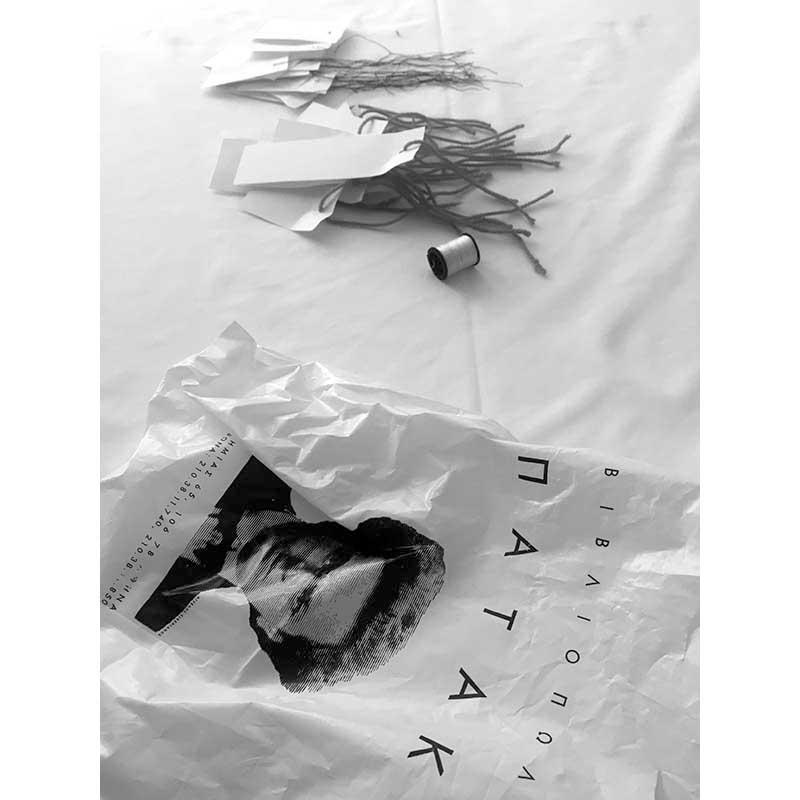
great grandfather’s face on a shopping bag.
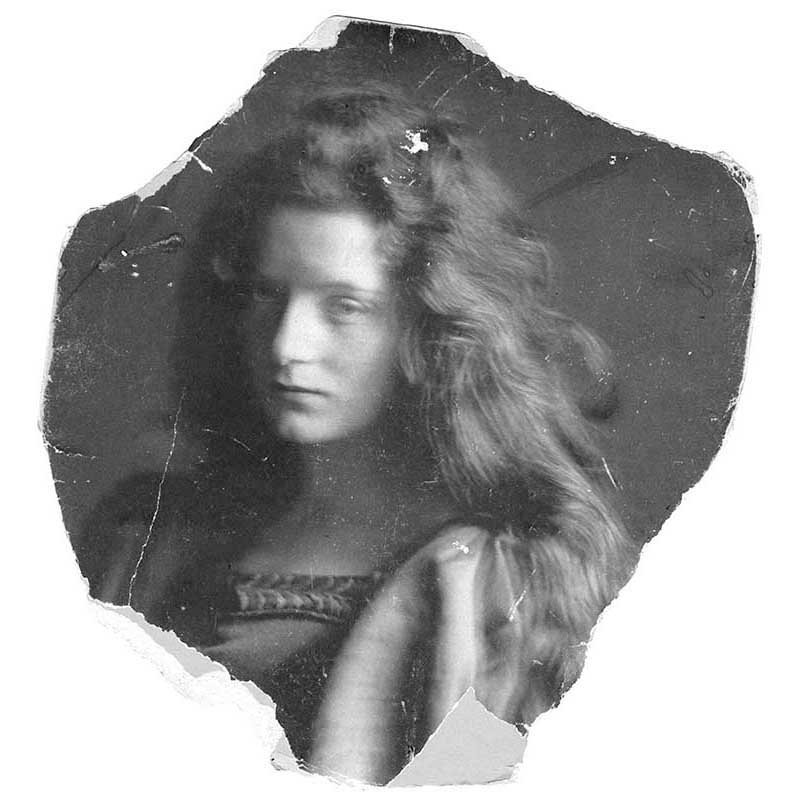
great grandmother, dressed as romeo i’m told.
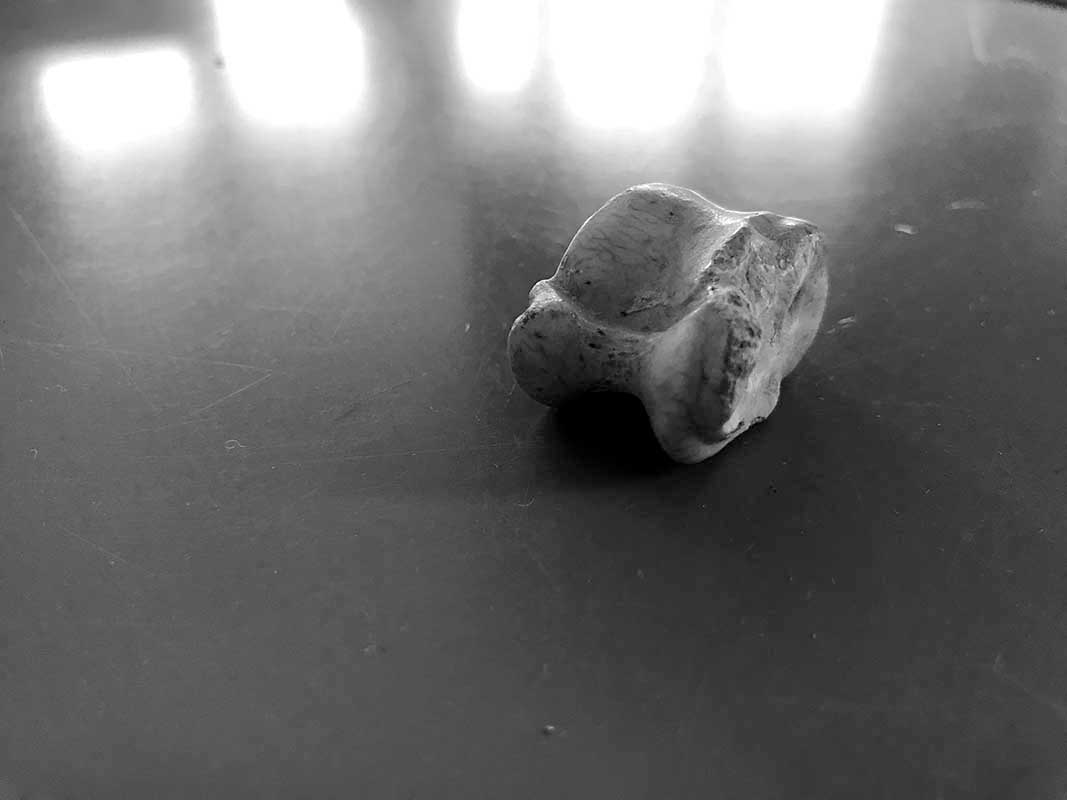
one ancient knucklebone
The Slumbering Past
We scratch and scratch at the sand, trying to get to the box, the place where all the papers are kept, the maps, the keys, the path. The self, the thought, the word, the law or deed that will clarify everything. Too much is destroyed, too much has gone missing. Is the archive the heart or the mind? The attic, the basement? Is it the enemy? The State? I am desperate before the locked door. What I want to know isn’t there. I don’t even know what it is I want to know. I will be buried in an immense sea of papers, scraps of anecdote fluttering in the dirt with no tool or system to give them order or meaning. A pile of rubble.
There is a wind or ghost of a wind…to lead the mind toward or away from fact. Fact not the same as truth. For fact lies like a lonely child in its dark bed until it is woken into a stream of story that sets it into motion with the other facts that had been sleeping around it. Though we might find a kiss in an old letter, we cannot find a fact for how the kiss felt.
• • •
Bumming around Greece, everywhere I went, cab drivers, hunters, farmers, and philologists recited my great grandfather’s poems to me or told me stories about his famous beauty, his plans for reviving Greece’s glory, his defiance of the Nazis, his almost erotic feeling for trees. Even thieves loved him, bringing him gold or cantaloupes to feed his vision. Or people gave me gifts: fresh eggs from their chickens, grapes from a family vineyard, books they’d written about my family, old hand-woven dowry dresses, even bones. I couldn’t believe how fabulous this man was. One aspiring poet I met confided that he always asked the barber to cut his hair “like Sikelianos,” but his wasn’t thick enough. Another told me he tried embracing trees like Angelos, in hopes of making poems flow. Angelos was nominated for the Nobel five times, they repeated. Five times! They were very proud. Soon I was too.
Things I Heard About Angelos
(Besides What Glafkos Told Me)
He heard land, plants, snakes, wind, waves and time all cry out to him. These forces said things to him others could not hear. Spirit moved him. We knew he could speak but was he listening?
He genuflected at the ancient altar never not in use and never unadorned which is the altar of Earth and all her inhabitants.
“If my companions were the centuries or the moment, I was unaware, my heart bore the weight of iron,” he wrote. Suddenly, it was the middle of a great war.
“My soul found itself in a vast nebula filled with the pollen of countless seeds that flew up and scented the air, like the efflorescence that rises from flowers and trees…
“I was unwilling, completely unable, to have a separate sense of Nature, of history, of my own soul… It is a vortex that invigorates my interior Rhythm.”
He called on his listeners:
“If you know others who should they open their mouths and project their voices…will be in perfect harmony to everyone and everything—to the wave, to the Earth and the stars, to the flowers, to animals and to people, to the centuries and the cycles of centuries, leading to a purposeful encounter—prepare yourself to [listen].”
Great grandfather, what were your favorite words?
Ah, I will tell you!
Rhythm
flowerlight
myriadshining
frenzy
the select few
Dionysius
Orphic
Earth
soul
Pythagorian
And revolutions?
Revolutions are good! I’m speaking of the Russian one, I love that inner intensity, exciting, but to liberate everyone, revolutions can’t be only material. You know I tried to cross the border to be a part of it, but they wouldn’t let me in! After the spiritual dismemberment (which is now), the center (which is nowhere + everywhere) must be Creative.
How?
From the great impersonal memory of Earth herself.
And the method?
“[H]e sees the stars as ‘animals of enormous size,’ then he hears their fullest melody, then he goes among them, then their beginning rhythm convinces him to dance his entire dance.”
What form will you take in your next life?
The act most “capable of breaking the fetters of matter…the act of total poetry.” I will be a lion. Or hedgehog. Or maybe a bear.
Some say he was born with a diaphanous caul over his eyes, a filament left over from the other world, so that everything he perceived was in-between. Others said he was born with a golden thigh, that he killed a deadly snake by biting it, that a river spoke to him while he was swimming in it.
One scholar told me he left Greece specifically to escape Sikelianos and all this bombast.
On the other hand
I cannot experience it for myself exactly, but I am told Angelos’s poems are sonically and rhythmically hypnotic. My friend Katerina says: “We were made to read him in school, and I hated him, until one day I was sick in bed and read a poem of his and I went into a trance. When I came to, I shouted to my mother, ‘Oh my god, he is a god!’”
Speech
He saw the brightest places on Earth glowing and saw that the sanctuaries in India, Tibet, Chaldea, Iran, Syria, Egypt, Arabia (and in the north too) were transmitting their message and sounding it out to each other. In Delphi, the mother-voice tapped out the Rhythm, the Oracle, the Logos. Nature is the revelator, men make obstacles with their machines and their structures (government, money, power, war), and we are blocked from historical radiance. This flower, this rock, mean as much as the human soul. Undo your usual modes of thinking about living. We are studying not what man is but what he could be. No, what the human is if it sheds its skin.
• • •
What Glafkos had told me about him was simple. He was a peacock! he said in his Greek accent, with air in the vowels and percussion in the consonants, giving it spit. In the stories I heard in Greece, my great grandmother was the rich American who funded Angelos’s vision, the devoted wife who was abandoned for a younger woman, because the great man, that handsome player, just had to move on. Poor Eva! they exclaimed. How did she feel after he left her? they asked me. I didn’t know.
The Future is a Gamble (Astragalomancy)
The first houses in Delphi were built three thousand years ago, say the archeologists, but there are always older things. From the ancient cleft in the rock (where the oracle is housed) there is a path, and in a few hours’ walk up the mountain you’ll find yourself in the Korykion cave, sacred to many, each spirit with its own overlapping time span: the nymphs, the Muses, Apollo, Pan, Dionysos. Supplicants moved up or down the mountain by moonlight, flaming torches in hand, feet polishing the path’s stones to a glassy sheen. The daemons and nymphs and gods flickered and sputtered and waned and changed, and on the cave floor wild things went wilder or were tamed. Signs of new gods are built on old ones. A sheaf of Demeter’s corn over an Orthodox door. Something even more ancient scratched below the corn.
In daytime, the cave is suffused with a blue light that is not the light of machines but of molecules scattering, and if you sing in the middle of it, as my daughter did one day in June some years after she napped at Sappho’s cliff, your voice echoes around the sound of water rushing through rock.
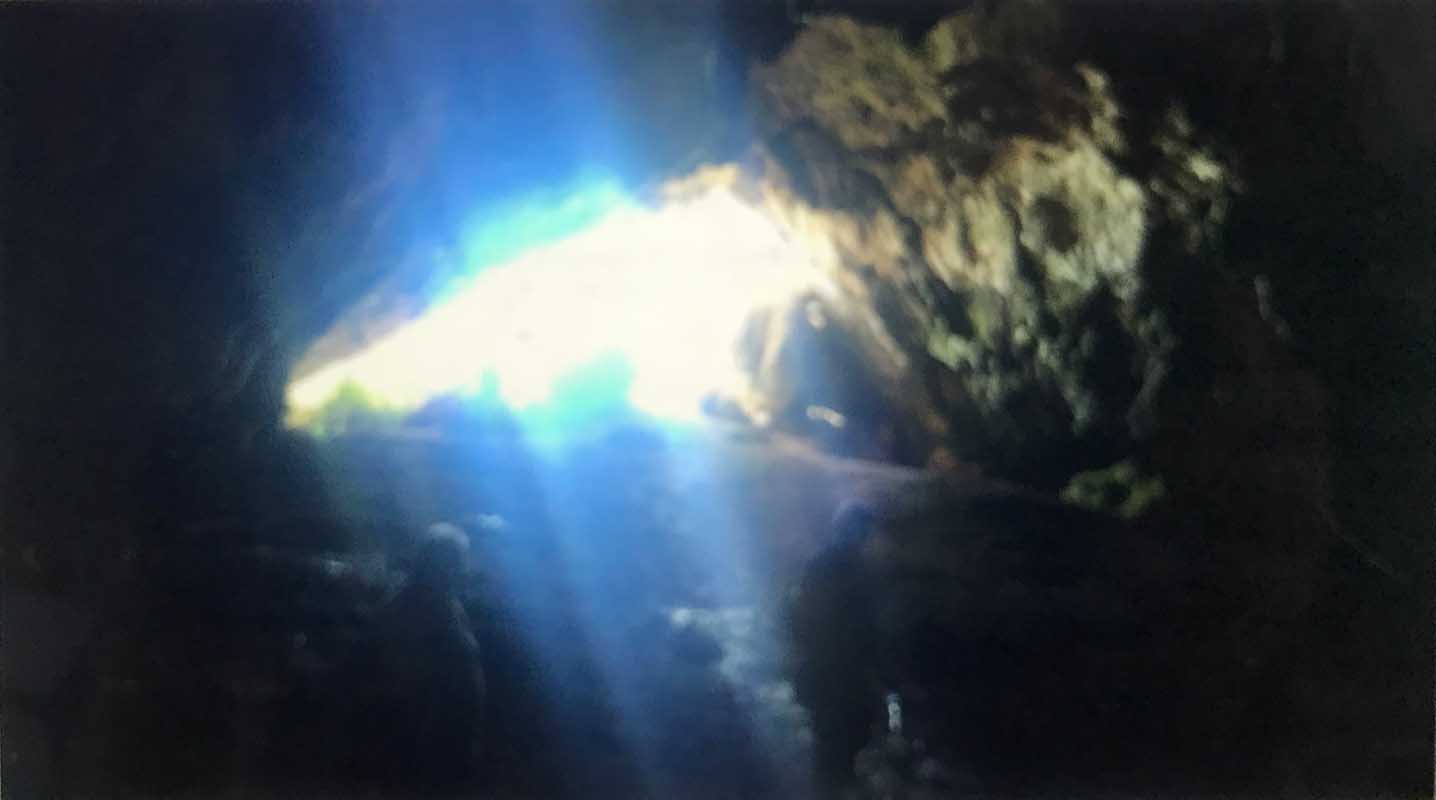
Or is it shapeless wind? If you dig around in the dirt you can still unearth astragaloi, the ancient sheep or goat anklebones (also called knucklebones) that were used to gamble or, for those learned in astragalomancy, to prophesy. Even Aphrodite was known to play bone dice with Pan. We know the future is a gamble, we hope for the winning roll. That is the imagination at work, or the imagination’s lack, forming a dark pit with no water or air, hoping prophecy will fill it. We can give the future a shape like a supple brown paper bag, stuffed with endless night or with rich dark, with ripe tomatoes, with mycorrhizal filaments, with liberation and joy. A bottomless bag. The future holds everything.
We have three of those anklebones locked away in a box in this house, taken from just above the hind foot of an animal that was alive thousands of years ago. One bone for each of us: me, my beloved, the daughter who sings. They were a gift from Panos, the former mayor of Delphi, who scratched in the dirt with a stick far from the cave’s mouth and pulled forth the bones. At least 23,000 ancient astragaloi have been found in the cave, I read, and feel a little less ashamed that we hauled three of them across the ocean hidden in our bags. These were not the marble things left by the powerful and rich, as down the hill at Delphi’s sanctuary, but things of mud and bone the shepherds offered. Sometimes a tiny trace of gold, where it might have been strung and worn.
This was a world humming with divine communication. The leaves trembled in godly prophecy. Birds flocked and flew in messages’ shapes. Spots on the sheep’s liver you were eating for dinner told a story about the future, as did fire, vegetables, stars, beans, babies’ farts, sand, sneezing, and ripples on pond water.
The future refracts in myriad directions. We try to gather a story about the past, but the past also splinters and often hurts when we finger it.
If you go to the graveyard in Delphi, across the road from the Sikelianos Museum (devoted to the strange, stunning couple who used to ride the white horse into town), enter the cemetery gates (walk past Eva’s grave), and lean out over the hill, you’ll see the ancient Delphic theater and all the lonely statuary. Here resides the omphalos: the navel-stone that whispered with the gods’ voices, the stone Rhea gave Cronus to swallow instead of their baby, the stone that entombed a murdered snake. Here, Zeus’s eagles, flying from East and West at exactly the same speed, crossed mid-air or went talon-to-talon or kissed beak-to-beak. All these events announced Delphi as the center of the world, and the navel stone, swaddled in wool cloth, was dropped to mark the spot. Here, Zeus’s grandmother, Earth, gave the biggest birth, turning what was inside out: leopards, horses, goats, grasses, rabbits, Zeus’s mama, humans, mountains, gods, rocks. Gaia pushed it all out and here it all is. No living human has seen the original omphalos.
Under its wool gown, the world-navel was made of rock, an element that doesn’t seem to budge, but it is in fact in constant motion. Wind and water chafe it, iron particulates are carried to rivers from which we drink, particles change bodies. And song, too, moves stone. We know sound can start an avalanche and puncture flesh (eardrums, most commonly), and we know that Orpheus moved stones into place, building whole villages with the sounds of his poems. Gazed on too long, the bellybutton begins to grow fillets that stretch back on themselves, knotting you in; this is what happens when humans mistake Gaia’s fruits as commodities for their exclusive use. For example, the rare earth minerals in my cell phone, the mining and sale of which inflame blood-atrocities. We would not wake from this nightmare if we dreamed it each night, and we go on dreaming each day as we tap the screen. Eva called this the insect future.
• • •
Dream: I was in a small forest clearing gathering fruits and flowers and nuts, when I saw a wooden sign hidden in the trees: H-O-T-E-L, written in childlike letters, and as I neared I could feel threatening shadows lurking in the woods. Go away! I tried to shout, but as in all my dreams of danger, my voice was like granite, unable to lift its stone wings out of my body. From me no sound came. When the rapist, the monster arrives, my voice-box breaks.
It turns out the dream place was already occupied by industrial ghosts. Go away! my mouth said but not my voice. Now I could see that the olives I’d gathered and placed on a makeshift pedestal/altar had already been eaten. All that was left was gnawed pits arranged as if they were still fruit. Pit, a synonym for grave. The corporate ghosts had eaten all the flesh and left us with corpse-fruit! So, do we stay in this clearing and let them fool us, or do we wink, leave them to their pits and walk on?
Don’t keep knocking on doors to places that don’t see or hear you, my friend S. advised.
Or do we scream?
Photo credits, in order of appearance

