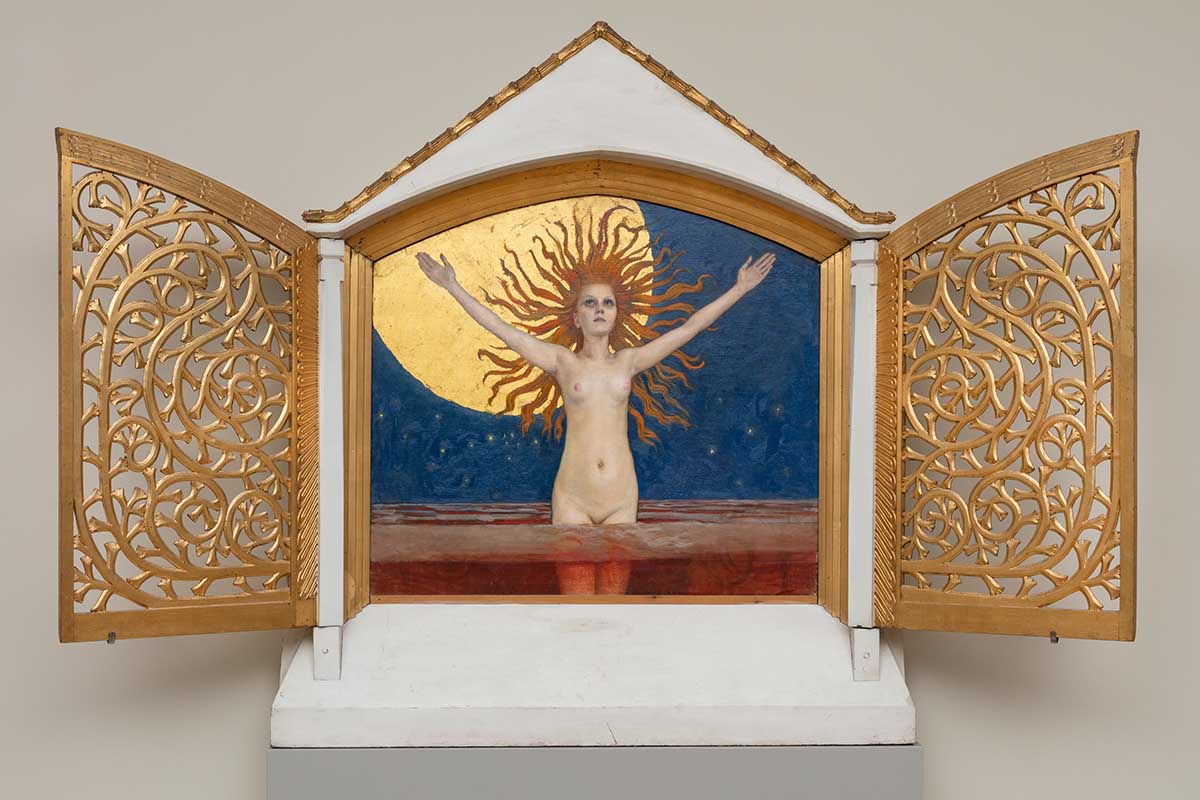
HOW TO DEMONSTRATE YOUR LOVE
Don’t talk about literature or ethics.
Don’t talk fast.
Best not to speak at all.
Completely off-guard—that’s how to face the morning, with your sagging flesh and your blood full of sand and that bitter taste in your mouth. How to face the cluttered kitchen, the columns of email, the one bird singing again and again its one long even note.
Just as if in every instance a menacing presence were approaching you from the dark with a knife pointed at your throat and you open your shoulders, then show them your palms. There are all the demands of this glittering blade with the force of an empire behind it, the person wielding it holding their face like a fist against the moment, and there you are, in a posture of utter defenselessness.
You will not be rewarded for this behavior.
If you really must speak, speak from this place and everything will line up beautifully of its own accord, like crystals in a dish.
Though beautifully of its own accord doesn’t mean you’ll hold her in your arms again. Or see her across a table. Or even just beyond your reach in a crowd. If you would really demonstrate your love to her, you’ve got to let that all go. Go where? You might wonder.
If you seek the company of others, instead, seek only those of genuine spirit. They may be difficult to find. There may be no one you feel you can trust. You may choose instead to live alone. You may eat and drink alone. You may have long mornings, long days, long nights. You may savor them.
Notice the moon in the window. After washing hands, when you slice the bread at your table, notice the sharp blade of the knife, and the sound it makes, like a small fire sawing in a circle of stones, in the woods, at night. As the seasons pass, you may be vaguely reminded of her—of something about her—by the beauty of these ordinary things. This will probably be no comfort.
It may be that nothing will ever seem to change or improve. You may be more lonely every day. Your heart may be exhausted. You may be astonished by what is in it. Embarrassed or dismayed. You may renounce everything and everyone and yet have no more, no fewer moments of clarity or love in your day than the alcoholic alone in his study, than the rich woman alone in a restaurant, eating a small roasted animal.
You may be made so stupid by the hurt of it all that you lose your bearings, become too trusting, forgetful, whimsical, naïve. People step away from you on the street, say, and people drop out of your life. Maybe you lose your job and all your money. Maybe you lose your home. Maybe you sleep in the grass, on your sleeve. It may be that you are a fool and that you have always been a fool.
You may be one of those who, reaching out for a bunch of radishes at the market, has forgotten entirely the path by which you’ve come. Who you are, whose hand, how the radishes. You may forget the days, the timeline entirely. What calendar. You may laugh because a piece of trash glitters and spins in the wind. You may weep because a filthy pigeon, limping, in a greasy puddle seeping out of a rust-bitten dumpster. Or because the blooming dandelion is already gone, continuity stopped, simultaneity stopped. You may no longer remember who it was you loved, or lost—whether she was woman, or river, or country.
Years from now, you will find yourself an old man in love with her all over again. Her face will come back to you, just as it was. This will be in winter. Cold penetrating your bones. The sky so clear, you’re upside down. Still, you will rise, wipe your tears, and put the coffee on. The soles of your bare feet against the cold floor, and a bird nesting in the moon, and the fire snapping.
All of this will be in celebration.
HOW TO FIND YOURSELF
For a while you’ll have to give up anything else and this may be harder than it sounds. There are no directions. Real life is nothing like a story where, say, some kind of whisper, some kind of faint rumor in the breath of a lake or stirring among the tops of summer trees can actually draw you completely away from your worldly engagements. Where all you have to do is stand up with a little resolve and step out of the crowded room, away from the music or your desk or your family and into the empty, open street, such that you find yourself suddenly alone on a page like a road with nothing to follow but the tiny track of black print toward some inevitable and promising resolution.
As if you could be changed that way.
As if this sentence were a march of ants to some safe underground nest. As if by these words alone you could see soft, dark birds floating up from the damp grass into the dense green canopies of trees above them. Like letters can rise up off a page with that kind of grace, or sing in the morning, or loosely scatter themselves like stars.
Even so, here you are. Alone on this page. On this empty street, say. Looking for yourself. The door through which you’ve come has now slammed shut behind you, and the silence is ringing. A blanket of clouds rumples the light above. There is no one here to help you find your way. Perhaps you have this story. Perhaps you’ve torn it from the pages among which you found it, folded it into a neat paper rectangle and slipped into your wallet, behind your money. It won’t help. Carrying it around, reading it again, asking others what to make of it all. None of that will work.
Meanwhile, this unbearable world. And being human in it.
Like you’re a starving woman, weeping for your lost children who’ve been baked into the meal on the table set before you.
Like you’re a carpenter, repairing the west side of your crumbling house by circling round it and dismantling planks of wood from the east side. Forever and ever and ever.
Worst of all are the days when you don’t care. How can your heart be so leaden and spiritless? And the people around you. Sometimes their eyes are like the eyes of wounded, dying animals. Others move around like ghosts, making strange sounds supposed to pass for speech, wishing to be heard, and understood. How can anyone be at home in this darkness?
Even this story seems full of mean tricks. One line on the page directs you with a big black arrow pointing left. Another with a red arrow pointing right. Everything it suggests to you, you suddenly see: a red apple, a smooth brown egg, a teaspoon, a key.
You can even see yourself, humiliating, standing there in the empty street, in your blue jeans, looking around for a crossroads, or trail of breadcrumbs, or a door. The title promised you something and? Well? Which way to go? In your hands, the story is slowly erasing itself one line at a time. Nothing is solid. Everything—the yellow paint on the road, the gas station lights, the distant grain elevator—pulses faintly with atomic shimmer.
I won’t be with you long. I’d like to give you some encouragement, if I can. Something ordinary and small. The glint of a gold piece on the dusty street. Something you could actually touch, and pocket, then finger as you walk along, seeking yourself. Something you could make a wish on, later, at a fountain.
But the magic of a page has its limits. The best I can give you here is the shape of that treasure on the sidewalk. That small, familiar circle, made and mirrored by your eyes as you focus them upon it.
◯
There’s something about it. How small it is. How it sits there alone in its form with same dignity of a monarch, or an oak. Every cup, pencil, and floorboard…ever so briefly, with all the will of the universe, holding in its edges and lines in the same way. As if everything were there to show you—hello, hello, hello—what space can do. How it can appear to take the shape of a window, or a book, or your own hand: we can be like this, or like that. We can be all things everywhere. We are every letter on a page and so you, too, are every letter on a page. You are the sunken muttering underside of all the words and you are the point at the end of each sentence. You are practically nothing at all in so slight a form. And yet—if you set your eyes upon that point—it gives you the oddest sense—it’s the kind of thing you want to talk about with someone. Like a woman who’s lost a coin then finds it again, straightens up in the street where she’s found it, and calls upon the neighbors to rejoice with her.

