Rain
She’d gone to Guatemala with another guy. She called collect. That’s how long ago. So-and-so is calling from God knows where, will you accept the charges? It was after midnight. The connection was bad. She was crying. Either the guy left her or she left the guy, it was hard to tell. The next morning, I called my boss and told him that my grandmother died.
“Again?”
“My beloved step-grandmother Swenson who raised me—”
“I should have fired your ass fourteen months ago.”
“Before you hired me?”
“Fuck the hell off.”
_______
I took a TACA Airlines flight to Guatemala City. We stopped in Mexico City and then we stopped in Guadalajara. The entire flight the overhead doors flapped like wings. From Guatemala City I took a bus to Antigua. Old colonial city, cobblestone streets. She and the guy had been enrolled in a Spanish immersion course.
That was the year she wore a headband. Also, her arm was in a sling.
“Thanks for coming.”
I nodded. Heroes don’t talk much.
She’d made plans for us, she said. “There’s a little village, a volcano out in the middle of the lake. Sound good?”
“Wherever.”
We took a yellow school bus to a smaller town and then took off on foot with our backpacks to the village. Did at one point we take a boat? I can’t remember. I still talk to myself about Lake Atitlán. More than thirty years ago and I write it out on the kitchen table with my finger. Some stories don’t need ink. I once read that Claude Debussy used to play on a closed piano lid. He only needed to hear the music in his head.
We took a room in an inn run by an elderly Pole who walked with two canes. He spoke with a British accent he told us he’d picked up during the war when he flew for the RAF. Shot down by the Nazis over Alsace. Military pension. Wandered the world until he washed up here.
“Aside from the death squads,” he tapped one cane and then another, “it’s paradise.”
In the afternoons a little girl served us coffee at a small table at the edge of the lakeshore. When the waves shoved in, the water washed over our ankles.
Our room faced the lake and in the morning, out of the midst, the cone of the volcano rose out of the water.
At night, it rained. While she slept, I’d go out and stand on the beach in the still sun-heated rain.
Toward dawn on our last day, I woke up and she was sitting on the edge of the bed.
“Can’t sleep?”
“I don’t know.”
The blades of the ceiling fan rotated slowly above like we were in an Antonioni movie.
“Is it Mike?”
“Who’s Mike?”
“Spanish immersion.”
“Chris.”
“So, Chris?”
“What about him?”
“What happened to your arm?”
“You think Mike beat me up?”
“Chris—”
“I tripped running in Antigua. Great health care. I didn’t pay a centavo.”
_______
Of me she said I could never see the forest for the trees. It’s a phrase I’ve never understood. Aren’t the trees the forest? I remember the day we met. I rode my bike through the big cemetery in Ann Arbor and sang to the graves. Insane to be that happy.
We used to play a game where we’d pretend we’d just met.
“I’m Harv. I didn’t catch your—”
“That’s because I didn’t tell you.”
“Harv Nadelson. Accounting.”
“Diane Somerville. Human resources.”
“So what brings you to the office party?”
“Thank God, you know? For human resources, I mean without humans—”
“Look, pal, I’ve got to go feed my cats.”
_______
The rain. And so hot our breath was like steam. We couldn’t take enough off. Except for your sling. Remember?
_______
She’s in Seattle. Why would anybody live in Seattle? Sometimes I text.
It’s Larry.
Larry? My tax preparer Larry? From 2014?
In the flesh.
You’re naked?
Why not?
Didn’t you go to jail?
It was only minimum security. I’d hop the fence and walk to town for a steak.
Nice.
Can I ask you a question?
Go.
What happened to that guy?
Which guy? My husband?
You’re married?
Sometimes.
Spanish immersion.
Oh, Atitlán! The volcano! You saved me. Remember how you saved me?
Did I?
You quit your job and swooped.
I got fired.
That’s even better. How are you?
I don’t know. Do you?
_______
The old Pole said he wouldn’t go back to Europe in a box.
Hope and Dino
They took in strays like us, remember? Kitchen packed, everybody shouting. Hope and Dino’s annual Christmas party. Dino in an apron at the stove, hot face red as an apple, all four burners going. Hope trying in vain to herd us out of the kitchen. Come on, people, we’ve got this huge fucking house and you all stuff in here like you’re on a bus? And we all jostled each other a little but nobody made much of a move to clear out because the kitchen was where the action was and the food, of course, all that food. Hope and Dino were both so big on food. Roasted duck, piles of ham, soups, mashed potatoes, candied carrots, eight different kinds of salads. Yorkshire pudding. Cookies, an infinite variety of cookies. Those three dogs mooching at our knees and all the kids underfoot. I didn’t know about kids then. I hardly noticed them but there were legions of kids. That big house on Russian Hill, front door on Leavenworth Street, back door on Polk. One of those old San Francisco places, crazy huge really, three or four floors. It had been in Hope or Dino’s family, I forget which, otherwise they’d never have been able to afford it. And in the meantime, they couldn’t afford to heat it, which is another reason we all crammed into the kitchen. It was loud, raucous, anarchic, and that first year we didn’t know a soul in the city. Hope tried to introduce us to people. She introduced everybody to everybody. She didn’t want a single soul to feel left out or not paid attention to. They were both like that. Dino too. They’d pull you in, make you feel like you had pride of place in their chaos, and what a relief it was not to have to make a choice about anything, about what to say, about who to talk to, to not have to think, to just be part of it all. We could have been anybody and it wouldn’t matter. And that’s the thing, we were anybody in that room full of names, of poets, novelists, journalists, editors, painters, jazz musicians, potters, flutists, philosophers. One year the person who played JT LeRoy showed up. Amy Tan was a regular. Gary Snyder. Ben Fong-Torres. Craig, that Craigslist guy. The ex-mayor who was still mayor, Willie Brown. He was always there, every year, holding court at the top of the stairs. Hope and Dino had founded a magazine. It had folded after three or four issues but it had made enough of a splash to be remembered. Lit criticism and pornography, together at last. Now Dino worked at the Examiner and Hope was writing a novel. She liked people to be interesting. She said if you’re not interesting, you’re not welcome at the party, and this too made us feel like somehow we’d crossed a threshold. We were interesting! She was a little like Mrs. Ramsay in To the Lighthouse in that she wanted people to converse, to discourse, to engage each other. And so we did, we conversed amid the uproar, we discoursed, we engaged, shouting God knows what, and we laughed and we hugged people whose names we didn’t know and never would, and when we did eventually move to other parts of the house—there was caroling in the front room, the TV was on, the kids were watching TV but still there was singing, ragged singing, and somewhere in there were our voices too, croaking out O Come All Ye Faithful, and of course it collapsed, it isn’t as if we didn’t know it would eventually collapse, Hope was a beautiful hothead and Dino was never wrong about anything, ever, but after, what, six, seven, eight years of those annual parties, maybe we could be forgiven for not seeing it coming when the end of it had been there all along. They fought so hard and so long over the house they both lost it to pay the lawyers. But do you remember? Still. Dino by the stove, Hope yowling happily, Get out of the kitchen, you deadbeats, out, out, out, and the steam, how it would rain down the kitchen windows like melting snow.
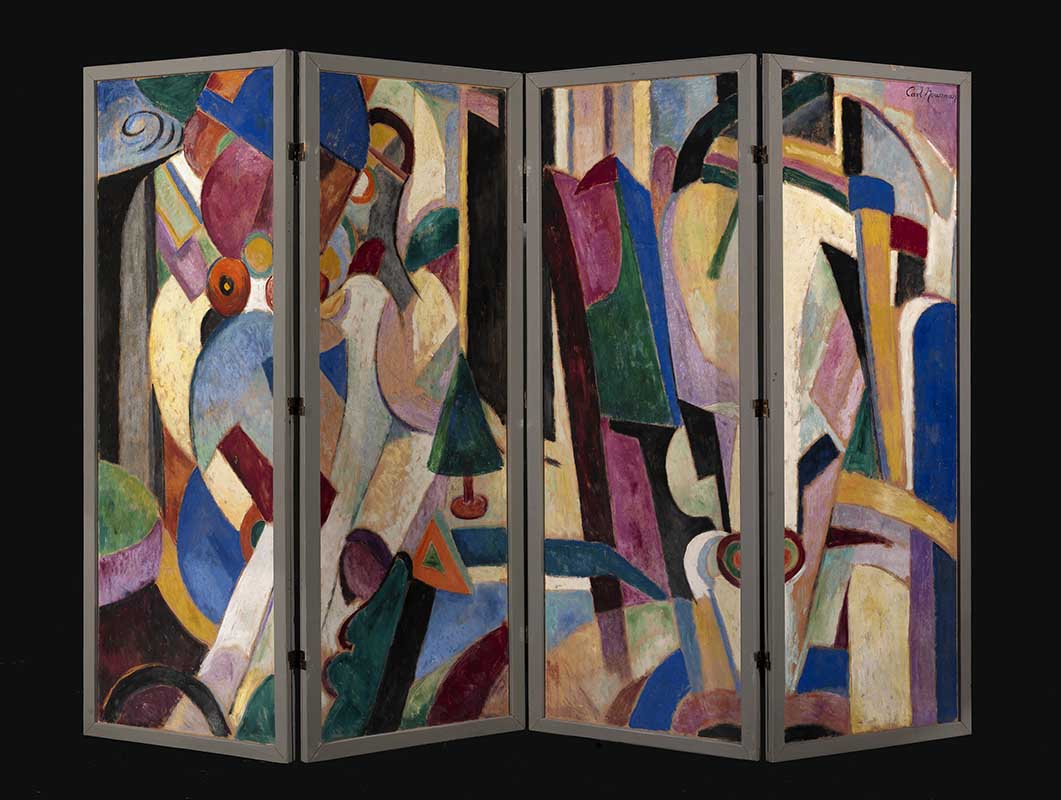
Image credit: Carl Newman, Spirit of Christmas, c. 1915-1920. Smithsonian Museum.

